The Quiet Responsibility of Raising Human Beings
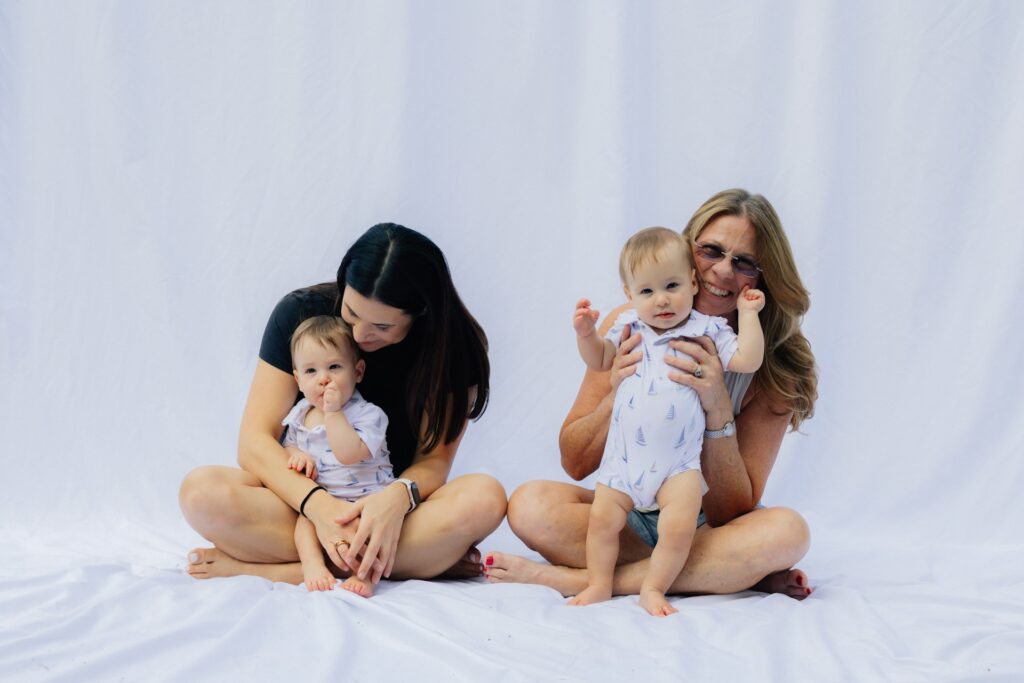
Modern parenting suffers from a peculiar contradiction. Never before have parents had access to so much information, and yet many have never felt so uncertain. Entire industries have emerged around childhood. There are experts for sleep, experts for feeding, experts for learning styles, emotional intelligence, screen time, language development, socialization, and every conceivable milestone in between. The result is not necessarily confidence. More often, it is exhaustion.
Beneath the endless advice lies a subtle assumption that children are projects to be optimized and that parenthood itself is a performance measured by outcomes. We speak of raising successful children, resilient children, confident children, accomplished children. Rarely do we stop to ask a simpler and perhaps more important question: what kind of human beings are we inviting into the world?
For much of history, parenting was never primarily concerned with achievement. It was concerned with formation. Character mattered more than credentials. A good childhood was not one that prepared a child to win every competition, but one that prepared them to inhabit life well. Wisdom, kindness, curiosity, gratitude, and the ability to love and be loved were regarded not as secondary virtues, but as the very purpose of upbringing.
Somewhere along the way, however, modern life transformed parenting into management. Childhood became increasingly structured. Time itself became productive. We began to fill every empty afternoon with lessons, every silence with stimulation, and every uncertainty with intervention. Yet children, despite all our sophistication, remain remarkably unchanged. They still require what generations before them required. They need affection. They need security. They need freedom to explore. They need adults whose presence reassures them that the world is trustworthy.
Children do not remember their upbringing as a collection of isolated events. They remember it as an atmosphere. In adulthood, memories rarely return in chronological order. They return as feelings. One remembers the warmth of family dinners, the certainty of a parent’s embrace after disappointment, the sound of laughter echoing through familiar rooms, or the quiet rituals that made ordinary days feel significant.
Long after factual details disappear, emotional realities endure.
This is because childhood is not merely a stage that human beings pass through. It is the foundation upon which the rest of life is constructed. Psychologists have long understood that our earliest relationships become the templates through which we understand trust, intimacy, self-worth, and belonging. In many respects, parents are not simply raising children. They are shaping the future memories from which adults will eventually make sense of themselves.
This responsibility can feel overwhelming until one realizes that children are surprisingly forgiving of imperfections. They do not demand flawless parents. They do not require extraordinary experiences. They are less interested in perfection than in availability. They seek not impressive performances of love, but the ordinary consistency of it.
Perhaps this explains why some of the most treasured memories of childhood are astonishingly mundane. A bedtime story repeated hundreds of times. Sunday mornings that unfolded slowly. Baking with grandparents. Long conversations in the car. Traditions whose significance was invisible at the time but became precious decades later.
In an age obsessed with novelty, families often underestimate the power of repetition. Rituals matter because they create permanence. They provide children with an anchor in a world that is constantly changing. Repeated experiences communicate something profound: that some things are dependable, that some people remain, and that home is not merely a place but a feeling.
Yet parenting changes adults as much as it changes children. Before becoming parents, many imagine the relationship as one-directional. They believe they will teach their children how to live. Over time, they discover something far more reciprocal. Children possess a remarkable ability to reveal the forgotten dimensions of adulthood. They reintroduce wonder into ordinary things. They remind us that curiosity is natural, that joy requires very little, and that time is experienced not through efficiency but through attention.
Young children, especially, live almost entirely in the present. They are captivated by insects, fascinated by clouds, and capable of transforming ordinary objects into entire worlds of imagination. They move at a pace that modern adults often find inconvenient. Yet perhaps their pace is not the problem. Perhaps ours is.
The greatest challenge of contemporary parenting may not be protecting children from the world. It may be protecting childhood itself from the values of the adult world. Efficiency, productivity, comparison, and constant optimization serve many purposes, but they are poor substitutes for wonder. Childhood possesses its own rhythm, and it resists being hurried.
Years from now, very few parents will wish they had answered more emails, attended more meetings, or optimized more schedules. Most will remember fleeting moments they barely noticed at the time. A hand instinctively reaching for theirs. The mispronunciation of words that eventually disappeared. A sleepy child resting against their shoulder. Questions asked with complete sincerity about the moon, the ocean, or why birds sing.
The tragedy of parenthood is not that these moments end. It is that while we are living them, we rarely understand that they are already becoming memories.
Perhaps this is why raising children demands something increasingly rare in modern society. Not perfection. Not expertise. Not endless stimulation.
Only attention.
For attention is another word for love.
And in the end, the deepest longing of every child is not to have been perfectly raised.
It is to have been deeply known.
At The Cove & Kin, we believe that family life deserves to be approached not as a race toward achievement, but as a practice of presence. Because the true measure of parenting is not the life we design for our children, but the love they carry with them long after childhood has passed.