The Children We Raise, and the Adults We Become
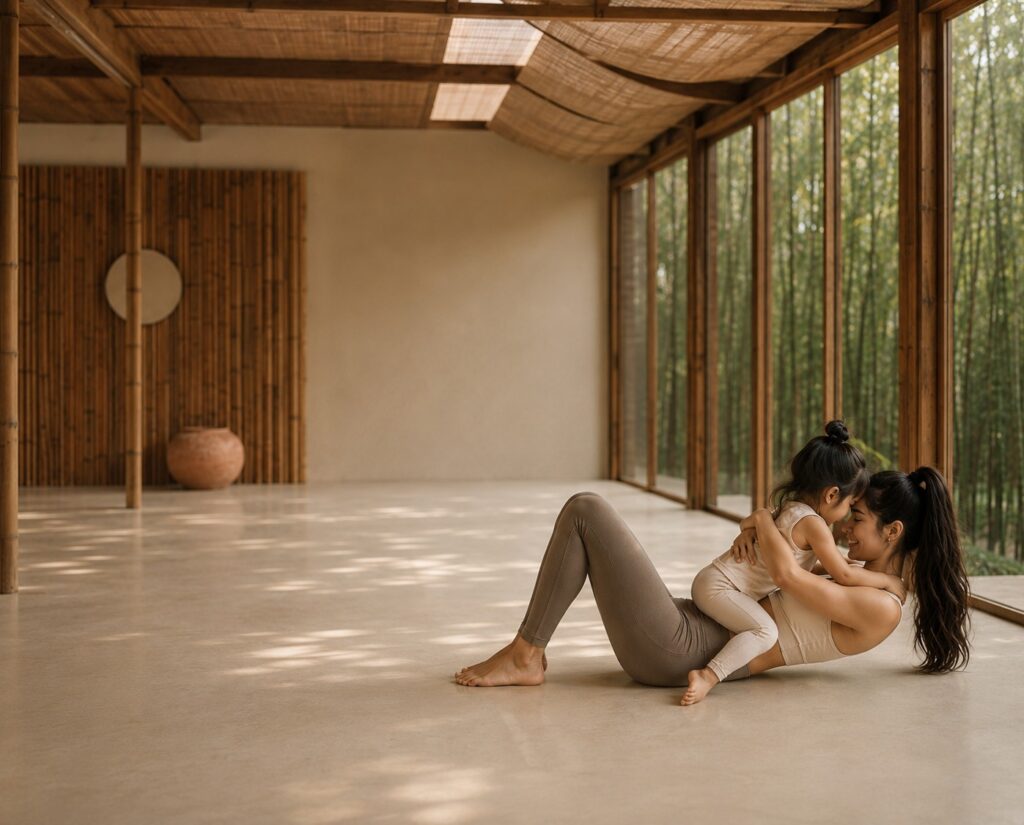
There is a tendency in every generation to believe that raising children has become uniquely difficult. In truth, parenthood has always demanded something profound of those who undertake it. What changes from age to age are not the essential challenges, but the conditions in which they are experienced.
Our era presents a peculiar difficulty. We inhabit a culture that prizes acceleration. We move quickly, consume quickly, communicate quickly, and increasingly expect life itself to conform to the logic of speed. Efficiency has become one of the defining virtues of modern adulthood. We celebrate optimization, productivity, and scale. We measure progress through outputs and success through accumulation.
Children, however, are curiously indifferent to all of this.
They do not understand efficiency. They are not interested in productivity. They have little regard for schedules, metrics, or quarterly objectives. Their world unfolds according to a rhythm that is older and slower than the one adults inhabit. They linger over questions. They become absorbed in insignificant details. They ask for stories they already know by heart. They insist on repetition. They require patience.
And perhaps this is why children can feel so disruptive to modern life. Not because they interrupt our work, but because they expose the assumptions upon which our work-driven lives have been built.
For many adults, parenthood begins with an illusion of control. There are books to read, systems to establish, milestones to monitor, and methods to master. We imagine that sufficient preparation will allow us to navigate the journey with competence and precision. Yet sooner or later, every parent encounters the same revelation. Raising children is not an engineering problem to be solved. It is a relationship to be cultivated.
Relationships, unlike systems, cannot be optimized without losing something essential.
Love itself resists efficiency.
No one asks how to maximize a conversation with an old friend. No one seeks the most productive way to sit beside a loved one in grief. We understand instinctively that the deepest experiences in life derive their meaning precisely because they refuse to be reduced to utility.
Parenthood belongs to this category.
Its greatest moments often appear insignificant when viewed from the outside. Reading a bedtime story. Preparing breakfast together. Waiting patiently while a child explains something with enormous seriousness and very little coherence. Listening to observations that are repetitive, illogical, and unexpectedly profound.
To adults accustomed to measuring value through outcomes, these moments can seem ordinary, even trivial.
Yet memory has a curious way of revealing what truly mattered.
Most people cannot remember what gifts they received at the age of seven. They do not remember every school performance or family holiday. But they remember emotional realities with astonishing clarity. They remember whether home felt peaceful or anxious. They remember whether mistakes were met with understanding or disappointment. They remember whether they felt accepted, whether they felt heard, and whether they sensed that their existence brought joy to those around them.
These memories become more than memories. They become architecture. They shape the stories people tell themselves about who they are and what they deserve from life.
This is perhaps the most humbling aspect of parenthood. We imagine ourselves responsible for teaching children how to live, when in reality they are learning far more from who we are than from what we say. Children are acute observers of character. They notice our priorities, our anxieties, our habits, and our contradictions. They learn how to respond to stress by watching us respond to stress. They learn kindness from receiving kindness. They learn how to love by being loved.
And, inevitably, they reveal us to ourselves.
A child possesses a remarkable ability to expose the unfinished parts of an adult. Impatience becomes visible. Pride becomes visible. The need for control becomes visible. Parenting has a way of confronting us with ourselves, often in uncomfortable ways. In this sense, raising children is not simply an act of formation directed outward. It is an invitation to continued formation within.
Perhaps this explains why many parents speak of becoming different people after having children. Not because parenthood adds something entirely new, but because it strips away certain illusions. It teaches humility. It teaches dependence. It teaches that human beings are not self-sufficient creatures, but relational ones.
Above all, it teaches the strange truth that some of the most meaningful work in life leaves no visible monument.
The world tends to celebrate achievements that can be quantified. Titles, wealth, recognition, and influence all possess a certain visibility. The labour of raising a human being does not. Much of it unfolds quietly, in private, and without applause. There are no headlines announcing years of patient love. There are no awards for ordinary faithfulness.
And yet civilization itself depends upon these invisible acts.
Every compassionate leader, every thoughtful artist, every ethical entrepreneur, every devoted friend, and every responsible citizen was once a child whose character was shaped by countless moments that seemed unremarkable at the time. History remembers individuals. It often forgets the homes that formed them.
But homes matter.
Indeed, they may matter more than we are willing to admit.
For cultures are not ultimately sustained by institutions alone. They are sustained by families. And families are sustained not by perfection, but by the repeated practice of attention, forgiveness, generosity, and love.
Perhaps, then, the purpose of parenting is not to manufacture extraordinary children.
Perhaps it is something far simpler and infinitely more demanding.
To create a home in which another human being learns, through thousands of ordinary experiences, that they are loved without having to earn it.
Everything else is secondary.
Because long after childhood has passed, and long after parents themselves are gone, that knowledge remains.
And from it, entire lives are built.